Smart Workshop Integration for Secure Tool Chests
By Linh Nguyen • 31st Dec
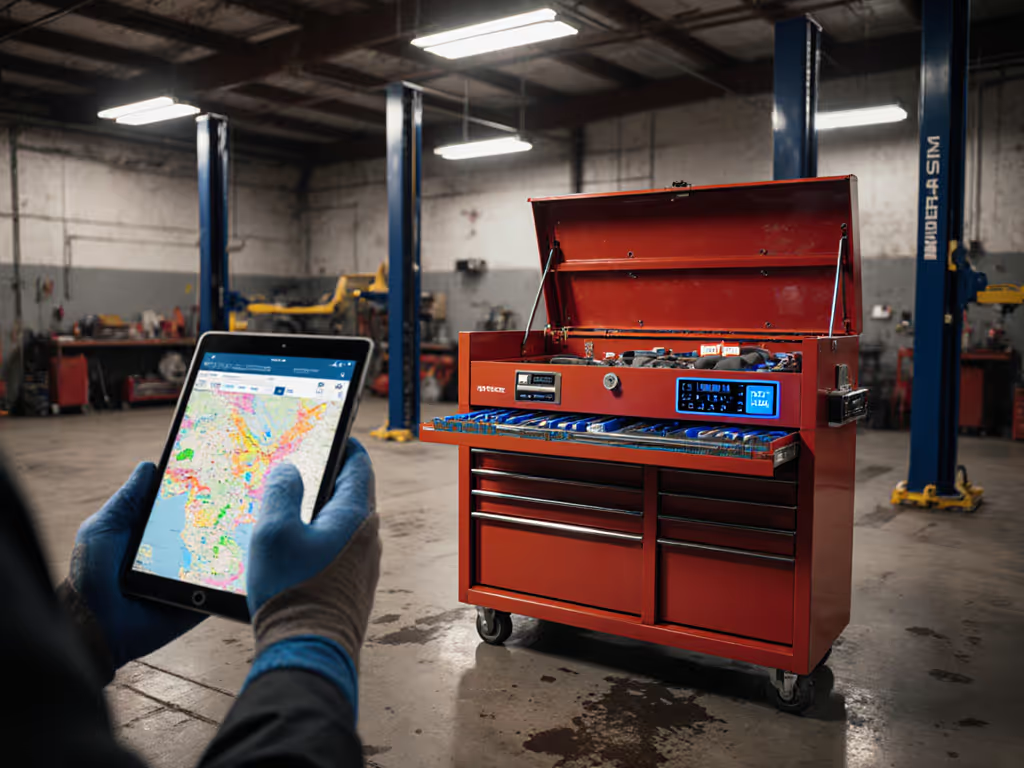
In the heat of a busy shift, when your hands are already slick with coolant and your mind is tracking three jobs at once, the last thing you need is a fight with your tool chest. As a shop ergonomist who's reset countless sticky drawers and unlabeled chaos, I've seen how poor smart workshop integration turns skilled technicians into frustrated hunters, wasting time, energy, and often safety margins. Your tool chest garage isn't just a metal box; it's the operational heartbeat of your bay. When it hums with quiet precision, your workflow glides. When it fights you, everything compounds: mistakes creep in, fatigue builds, and hands get hurt. That's why I map reach, tune slides, and shadow tool zones, not for comfort's sake, but because good ergonomics compounds: fewer mistakes, steadier pace, safer hands. Let's rebuild your workflow around tools that work with you, not against you.
Step 1: Map Your Workflow Zones for Precision Reach
Before you buy a single sensor or upgrade a drawer slide, you need reach-distance metrics anchored to your bay. Most techs I coach default to storing tools wherever empty space exists, not where they're used. This creates wasted motion patterns that bleed time all shift long. Instead, define three core zones: your primary work position, your cutting/measuring station, and your tool chest. This "workshop triangle" must keep your most-used tools within a 16-inch arm sweep when you're in primary position. Beyond that, you're racking steps, not saving them. To prioritize high-frequency tools, apply the 80/20 drawer optimization method.
Label it once; find it always
Use a tape measure and sticky notes to log where you reach for each tool during a typical job (e.g., "10mm wrench: 24 inches left of bench edge"). You'll likely find 20% of your tools live outside your efficient zone. Relocate these into front drawers or wall-adjacent zones. For heavy items like impact guns, ensure they sit between hip and shoulder height (bending or overreaching to grab them multiplies fatigue with every use). One diesel tech I worked with cut his daily torso bends by 78% just by shifting his air tools closer to elbow level. That's not convenience; it's sustained pace.

Step 2: Select Smart Chests That Listen to Your Workflow
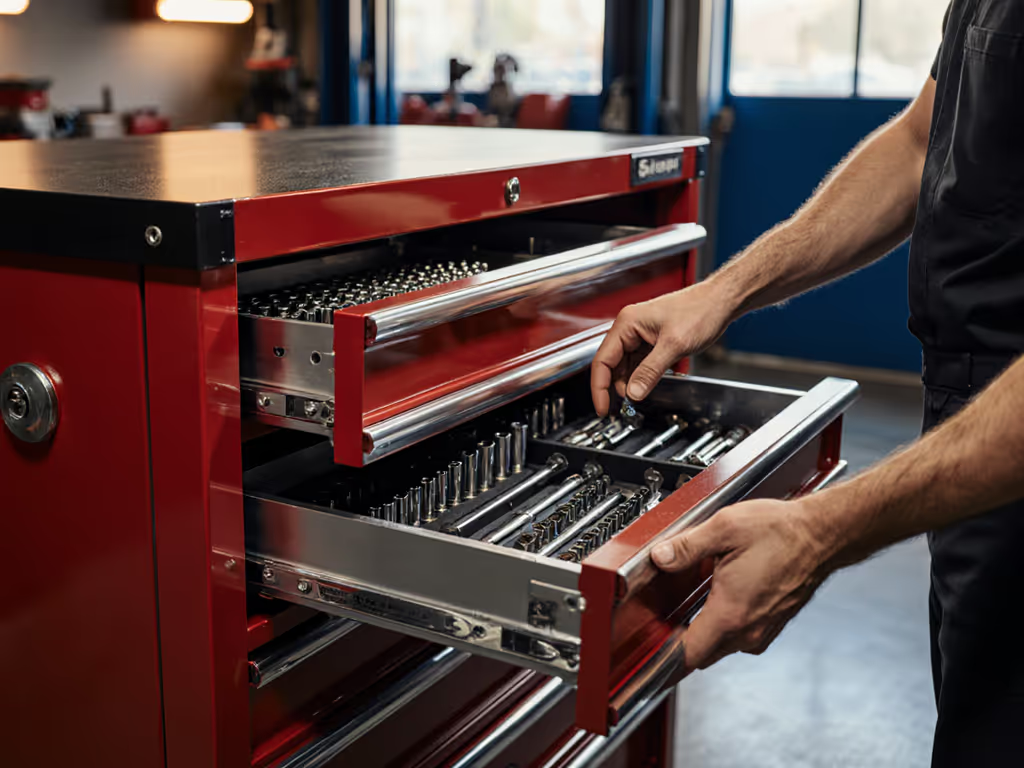
Forget "smart" for gimmicks. True smart workshop integration means technology that disappears into your workflow, not disrupt it. Look for features that reduce cognitive load: drawers that glide silently on self-closing ball-bearing slides, shadow foam that survives acetone wipes, and automated tool tracking that spots gaps before a job stalls. Ball-bearing slides rated for 100+ lbs. with full extension aren't luxuries; they are fatigue barriers. When drawers open smoothly without rattling (a noise and glide descriptor I always test), your brain stays focused on the task, not the tool.
For high-value tools, IoT tool storage pays off fastest. Take the DEWALT DCE040 Connector: it transforms existing 20V tools into trackable assets with street-level "last seen" data. No more hunting for a missing impact driver across three bays. Your phone shows exactly where it was last used. Crucially, it doesn't force new behaviors; it piggybacks on tools you already grab daily. That's the litmus test for smart tech: does it fit your rhythm, or make you adapt to its?
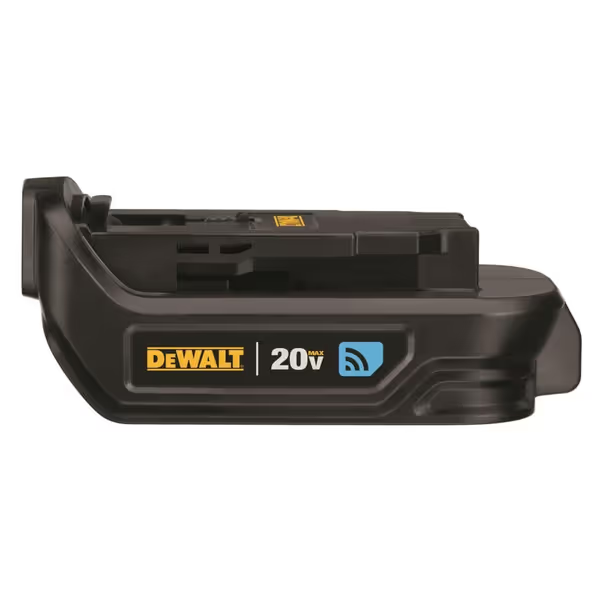
DEWALT DCE040 Connector
Track, secure, and manage your DEWALT 20V tools.
$27.56
4
CompatibilityDEWALT 20V MAX* Tools
CompatibilityDEWALT 20V MAX* Tools
Pros
Locate lost tools with 'Last Seen' feature.
Deter theft with 'Disable when out of range' alerts.
Efficiently assign tools to jobsites/users.
Cons
Not compatible with 60V DEWALT tools.
Customers report mixed experiences with the battery connector's functionality, with some saying it works as advertised while others note it doesn't work with 60V Dewalt tools. Moreover, the product quality, sturdiness, and value for money receive mixed reviews, with some finding it good while others consider it trash and permanently attached. Additionally, the battery life is concerning, with one customer noting it's only good for 3 years, and the app functionality receives negative feedback.
Customers report mixed experiences with the battery connector's functionality, with some saying it works as advertised while others note it doesn't work with 60V Dewalt tools. Moreover, the product quality, sturdiness, and value for money receive mixed reviews, with some finding it good while others consider it trash and permanently attached. Additionally, the battery life is concerning, with one customer noting it's only good for 3 years, and the app functionality receives negative feedback.
Step 3: Build Labels That Outlive the Shift
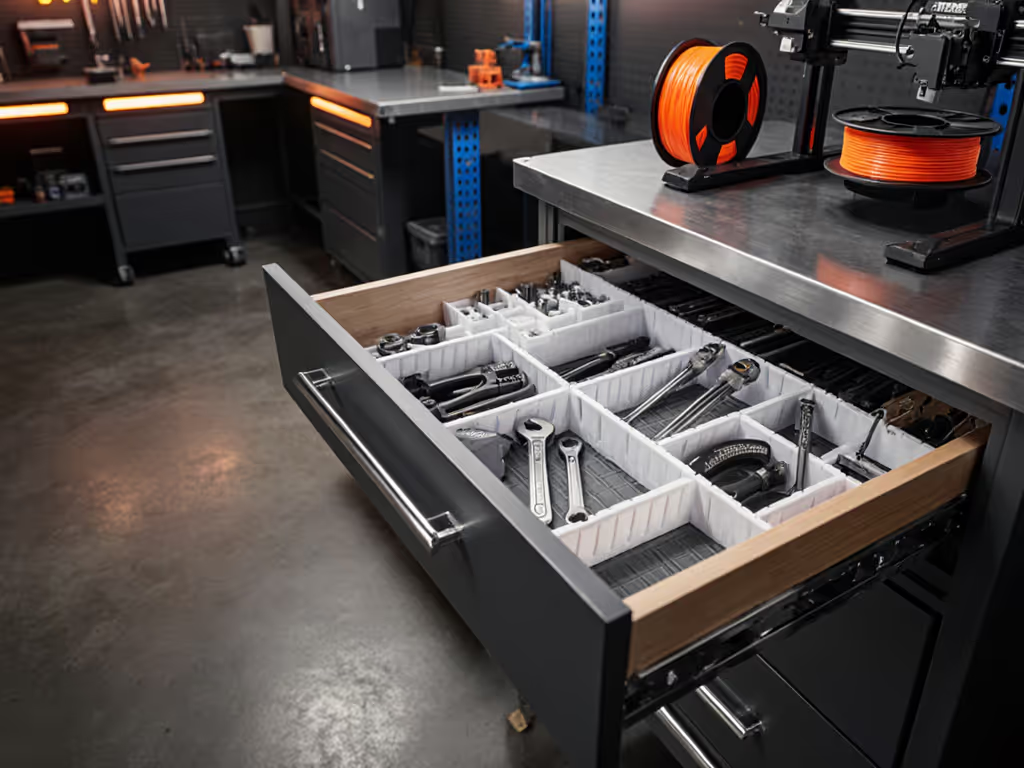
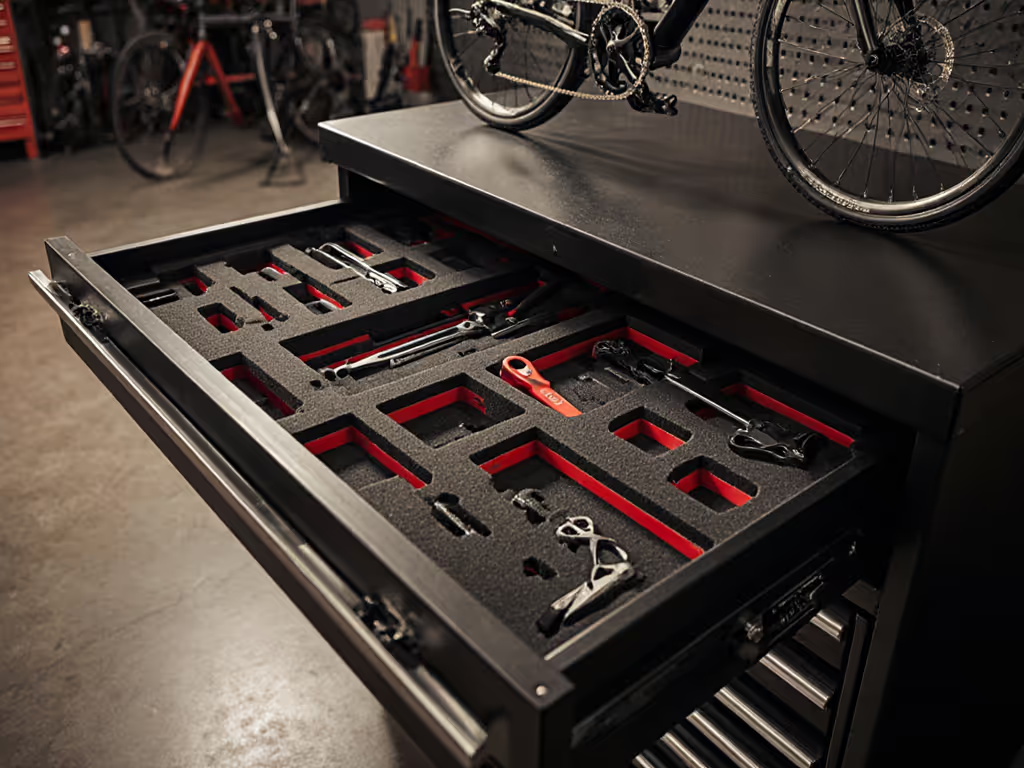
Clear labeling language isn't about neatness; it is cognitive safety. In a shop buzzing with distractions, a blurry or missing label forces your prefrontal cortex to solve a simple retrieval problem. That mental tax adds up to 2.7 seconds lost per tool (a fact confirmed by NIOSH studies). Your labels must survive oil, grit, and degreaser wipes. Pair labels with custom foam organizers to lock tools in place and make missing items obvious. I use 0.030" thick vinyl tags laser-etched with high-contrast sans-serif fonts, not stickers that peel by lunch.
Place labels at eye level when drawers are fully open, not on the front edge where fingers obscure them. For specialty tools like torque wrenches, add color-coded zones (red for critical specs) so you spot discrepancies instantly. Label it once; find it always isn't just my mantra, it's what happens when your visual system works with your muscle memory. One HVAC shop reduced missing-tool reports by 92% after relabeling in this format. Their techs didn't just find tools faster; they saw gaps immediately, preventing incorrect assemblies.
Step 4: Secure Without Slowing Down Your Flow
Smart workshop security shouldn't feel like a prison. Choosing the right lock matters—compare options in our locked tool chest security guide. Biometric locks or voice-controlled access ("Hey Tech, open my torque drawer") only work if they're faster than fumbling for keys. Start with keyed-alike systems across bays (this alone cuts tool-switching time by 40% in multi-technician shops). For high-risk environments like aviation maintenance, layer voice-controlled tool organization with RFID tracking. Saying "Locate Aircraft Socket Set" should pull up real-time location data without pausing your workflow.
But remember: security features must pass the grease test. Fingerprints smeared by shop grime shouldn't lock you out. Test voice commands over typical bay noise (air tools, radios). If it requires you to speak like a news anchor, skip it. True security is seamless: like a drawer that auto-locks when rolled behind a vehicle but opens instantly with a palm press. That's how you keep tools accounted for and your workflow uncompromised.
Your Actionable Next Step: The 15-Minute Shadow Audit
Don't overhaul everything today. Start with one drawer, your "core 15" tools for oil changes, tire repairs, or whatever your shop's most frequent job is. Time how long it takes to pull and return each tool. Then, shadow them with bright vinyl labels placed for instant visibility. Relocate tools exceeding 12-inch reach into this zone. Repeat tomorrow with another high-use drawer. Within a week, you'll have measurable fatigue-aware pacing: fewer steps, fewer errors, and hands that stay sharp from open to close. Because when your tools disappear into your workflow, what's left? Just you, doing your best work.
Related Articles