Agricultural Tool Chest Comparison for Faster Tractor Repair
By Linh Nguyen • 14th Jun
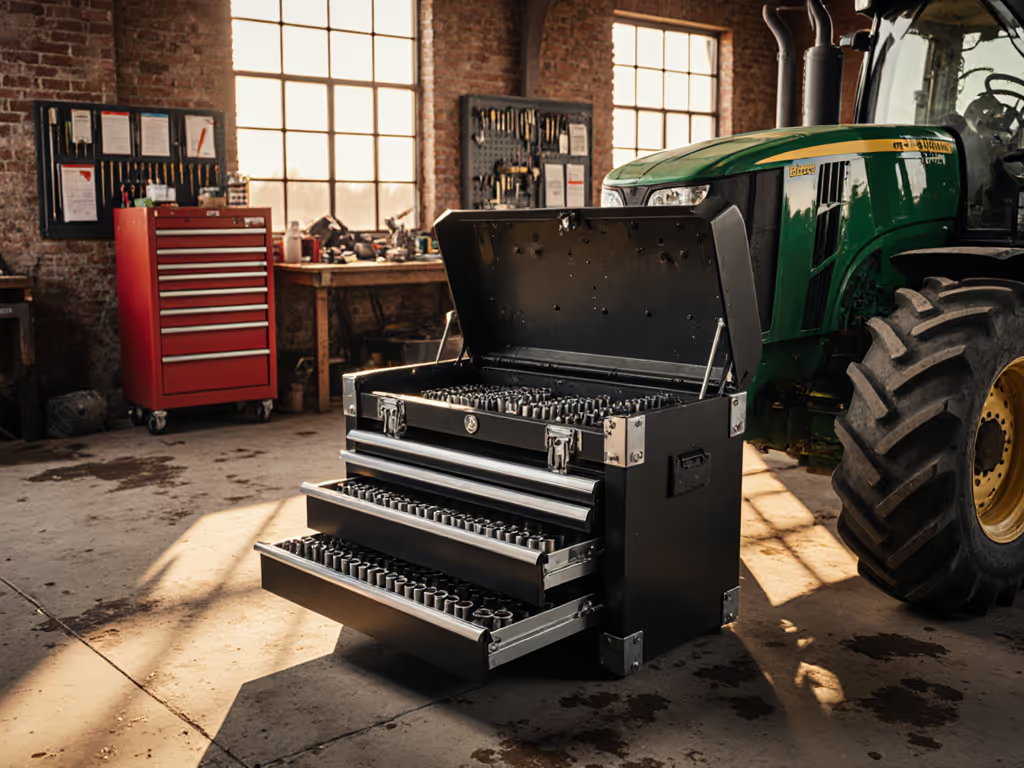
If you care about shaving minutes off every job, an agricultural tool chest comparison is not about paint and logos, it is about reach, motion, and how your farm equipment repair storage supports fast, repeatable work.
Most tractor breakdowns are solved with a small fraction of your total tools, yet many techs still walk laps across the shop or climb up and down machinery hunting for the same sockets and grease gun every day. That drag is avoidable.
Problem: Your Tool Chest Is Quietly Slowing Tractor Repairs
You already know the feeling:
- A tractor's half split in the bay, and the 3/4" impact socket is in "some drawer" two chests away.
- The grease gun has migrated from the service truck to a corner near the pressure washer.
- Two bays, two different drawer maps, so helping a teammate means asking, "Where do you keep your metric wrenches?"
What looks like "a bit of clutter" is really:
- Extra reach distance on every job.
- More bending and twisting to fish in deep, overstuffed drawers.
- Mental fatigue from noisy slides and visual chaos.
I've watched this play out in hot shops and cold barns: sticky drawers, mixed tools, and unlabeled zones quietly add seconds to every step. Multiply that by the number of tractors, implements, and seasonal rushes, and it is not just annoying, it is throughput.
The way you set up tool storage today decides how fast (and how safely) you can respond to the next breakdown.
Let's unpack the main agricultural mechanic tool chest types, then compare them using the metrics that actually matter for tractor work.
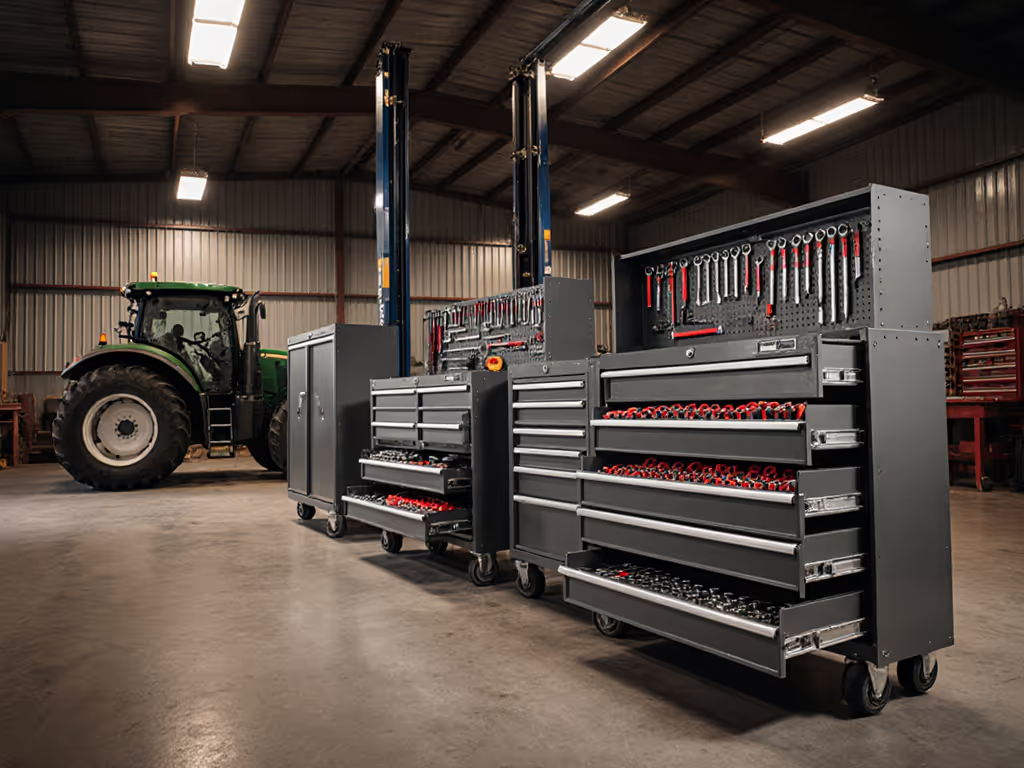
Ag Tool Chest Types: Which Style Fits Your Farm Workflow?
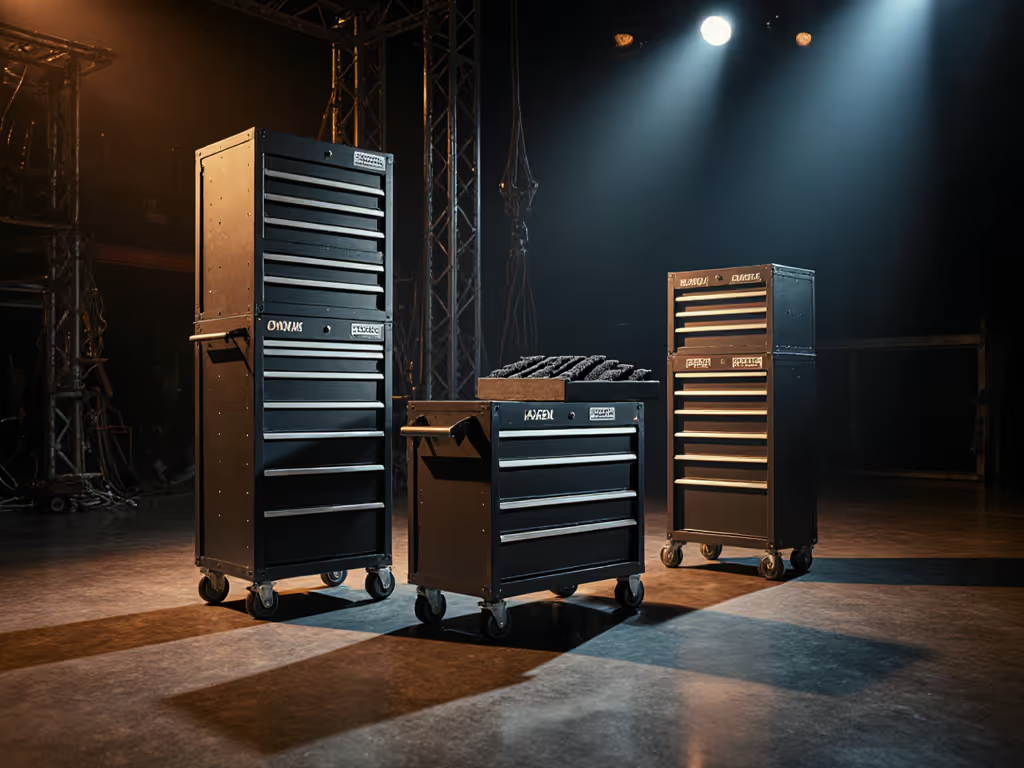
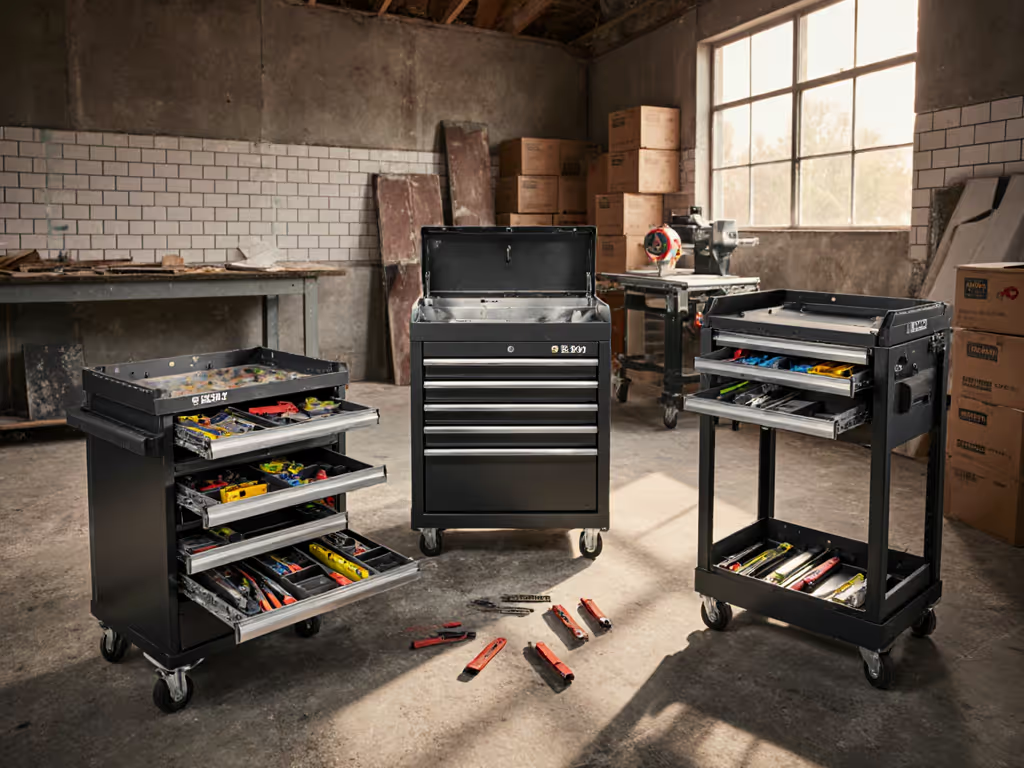
Most farm operations end up with some mix of three storage patterns. Instead of collecting chests at random, choose intentionally based on where repairs really happen.
1. Tractor-Mounted & Field Service Chests
These ride on the service truck, UTV, or even directly on a tractor platform or ballast box. They're your first line when a machine dies in the field. For proven mobile setups, see our top mobile truck tool chests for service vehicles.
Strengths
- Tools are with the tractor breakdown, not back at the shop.
- Compact layouts force discipline: only the essentials live here.
- Great when paired with fuel/DEF tanks and on-board air.
Watch out for
- Small lids and shallow drawers that don't fit larger ag-specific tools.
- Weak handles, tiny wheels, or poor seals for mud and dust.
- No dedicated grease gun storage solutions, so the gun ends up rolling loose in the bed.
For rough yards and field approaches, larger wheels (8" or more) and robust handles dramatically improve mobility under load, a point often highlighted in pro reviews of portable chests.
Best role: fast-response kit for common tractor failures and lube work, backed by a deeper shop chest.
2. Shop Roll Cabs for Agricultural Mechanics
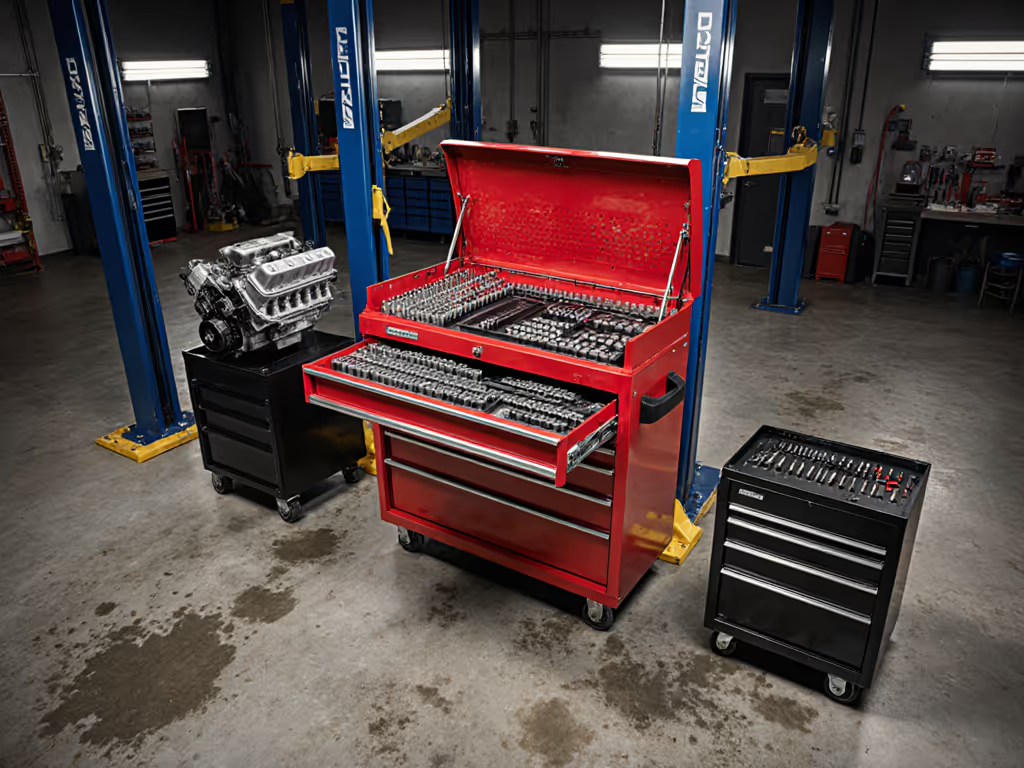
This is the classic mechanic's chest: multiple drawers, full-extension slides, usually parked near the main tractor bay.
Strengths
- High drawer count for detailed tractor repair tool organization.
- Full-extension slides make deep drawers truly usable for long-handled wrenches and pullers.
- Can be zoned by system: powertrain, hydraulics, electrical, diagnostics.
Watch out for
- Top-heavy setups with a loaded top box and narrow footprint.
- Flimsy slides that rack under heavy socket rails and puller sets.
- Casters that bog down on gritty, uneven shop floors.
This is usually the heart of your large farm tool storage plan. If one chest is "home base" for tractor work, optimize this one first.
Best role: primary workstation chest in the main shop, optimized for the 20-30 tools that drive 80% of your tractor work.
3. Large Stationary Farm Tool Storage Walls
Think tall cabinets, wall-mounted bins, and long benches with under-storage. They often grow over time (part purchase, part fabrication).
Strengths
- Huge capacity for infrequently used pullers, jacks, specialized fixtures, and fabrication tools.
- Easy to dedicate zones to systems: hydraulics, PTO, hay tools, sprayer components.
- Works well for shared tools in multi-tech operations.
Watch out for
- Too far from the primary tractor bay, leading to constant walking.
- No clear labeling, so the "big cabinet" becomes the junk closet.
- Little integration with mobile systems, leading to duplication.
Best role: long-term, low-frequency storage that feeds the main roll cab and field chest.
Quick Comparison: What Each Chest Type Really Buys You
| Chest Type | Best For | Speed Strengths | Risks if Misused |
|---|---|---|---|
| Tractor-mounted / field service chest | In-field breakdowns, lube routes | No trip back to shop; essentials on-site | Under-sized, poorly sealed boxes slow work and damage tools |
| Shop roll cab (primary mechanic chest) | Daily tractor repairs in main bay | Fast access, detailed organization, ergonomic reach | Top-heavy, noisy, or unlabeled layouts add fatigue and errors |
| Large stationary cabinets / wall storage | Rare tools, shared farm-wide inventory | High capacity, clear zoning by system | Becomes a black hole if far away and unlabeled |
Once you choose the mix that fits your operation, the gains come from how you set them up.
Key Comparison Criteria for Faster Tractor Work
Instead of asking "Which chest is best?", ask "Which chest lets me fix this tractor in fewer steps and less reach?" Here are the comparison criteria I use when I walk into any farm shop.
1. Access & Reach: The 10-Second Rule
For any chest you buy or rearrange, test it against a simple metric:
From your primary working position at the tractor, you should be able to put hands on your most-used tools in 10 seconds or less.
For farm equipment repair storage, that usually means:
- One main roll cab parked within 2-3 steps of the primary bay position.
- Top drawers dedicated to:
- 3/8" and 1/2" socket sets for common tractor fasteners.
- Combination wrenches in the 10-24 mm range (or your local standards).
- Basic electrical (test light, DMM, crimpers) and hand drivers.
- Mid-level drawers for pry bars, hammers, punches, and pullers.
When comparing chests, look at drawer height and width in those top rows. A chest with wide, shallow top drawers often beats one with many deep, narrow ones, because it keeps your most-used tools in a single, easy scan.
2. Drawer Strength, Slides & Noise
Agricultural work loads drawers hard: heavy sockets, big pullers, and assortments of specialty tractor tools.
When you compare an agricultural mechanic tool chest, check: If you're weighing slide options, our drawer mechanism comparison explains ball bearing vs roller vs soft-close under real loads.
- Slide type and rating: full-extension, ball-bearing slides with realistic load ratings per drawer.
- Deflection under load: pull the drawer fully out and lean on it; any flex or racking now will be worse under real use.
- Noise profile: noisy, gritty slides and slamming drawers are not just annoying, they add to end-of-day fatigue.
Quiet slides and labeled zones keep brains fresh. That may sound soft, but the mental load of a loud, visually chaotic chest translates directly into slower decision-making when you are diagnosing a stubborn hydraulic fault at 5 p.m.
3. Grease Gun & Fluid Service Storage Solutions
Grease guns, oil jugs, funnels, and rags can destroy an otherwise good layout if they float around.
Compare chests and cabinets for:
- A dedicated vertical bay or tall drawer that comfortably holds loaded grease guns upright.
- Tray or bin space for tubes and cartridges close to the guns.
- Easy-clean surfaces or pans under fluid items to catch drips.
If none of your chests support that, consider adding a narrow side locker or wall-mounted "lube zone" right near the bay. The key is to treat grease gun storage solutions as first-class needs, not afterthoughts.
4. Cordless & Power Management
Tractor repair now means laptops, tablets, scan tools, battery impacts, and work lights.
In your agricultural tool chest comparison, look for: If you want charging built in, compare integrated power station tool chests that keep batteries and chargers contained.
- A charging drawer or hutch with outlets and cable routing.
- Ventilation for battery chargers so heat can escape.
- Enough vertical clearance for your tallest chargers and packs.
If you rely on a mix of mobile boxes and fixed chests, make sure the cordless ecosystem is intentional: packs return to one labeled home, whether that is a charging drawer in the main roll cab or a small power cabinet near the diagnostics workstation.
5. Dust, Debris & Weather Protection
Farm shops fight dust, chaff, and grinding debris. In the field, add rain and mud.
When comparing options, prioritize:
- Tight-fitting drawers and doors that don't leave big gaps at the corners.
- For field chests, weather seals around lids and lock points.
- Smooth interior surfaces that are easy to wipe clean.
Stationary wall cabinets can host your more delicate measurement tools and electronics, while the roll cab handles dirty, daily work. Make sure the "clean" cabinet is close enough that techs actually use it instead of leaving calipers on the bench. For humidity-prone barns, follow our climate-controlled tool storage guide to prevent moisture damage.
6. Mobility: Yard, Gravel & Shop Floors
Even if a chest lives in the bay, you will roll it around for big jobs, cab work, or frame repairs.
Compare:
- Caster size and material: larger diameter casters handle chips and gravel better and roll easier under full load.
- Caster layout: wide stance and wheelbase reduce tipping risk when drawers are open.
- Push points: integrated handles at a comfortable height so you are pushing with your body weight, not hunched over.
Field chests on wheels especially benefit from large, durable wheels and strong handles for rough terrain, a common recommendation in tool chest buying guides.
7. Standardization Across Bays & Machines
If you have multiple techs, multiple bays, or both shop and mobile work, inconsistent layouts cost time.
When you pick chests, look for:
- Similar drawer counts and sizes across units.
- Enough flexibility to mirror the top 3-5 drawers in every primary chest.
- Front surfaces you can label clearly and permanently.
Standardized drawer maps mean any tech can step into any bay or onto any service truck and find the basics without asking.
8. Expandability & Ecosystem Fit
Farms rarely shrink their tool sets. The chest that feels "huge" this year may feel tight after one good season of upgrades.
In your comparison, consider:
- Can you add a top box, side locker, or hutch later without blocking outlets, windows, or doors?
- Does the footprint allow two chests to park side-by-side in your main bay?
- How will it integrate with existing mobile systems or crates you use in the field?
Think in zones: roll cab for fast-access tractor work, tall cabinet for low-frequency tools, and mobile chest or boxes that mirror the bay layout for field response.
Solve: Designing a Faster Tractor Repair Setup (Step-by-Step)
Here is a practical way to turn all this theory into a faster, calmer workflow.
Step 1: Map Your Real Tractor Work
For a week, keep a quick tally for every tractor job:
- Which tools did you reach for more than once?
- How many steps from the work to the chest?
- How often did you have to cross the shop for something "far away"?
You will see a pattern: a short "A-list" of tools drives most of your time.
Step 2: Choose the Right Chest Mix
Using that data, decide on your core configuration:
- Primarily field breakdowns? Invest in a serious field chest or truck box, and treat the shop roll cab as backup.
- Mostly in-bay repairs with some yard work? Make the roll cab your star and use a compact, mirrored kit for the yard.
- Multiple techs sharing space? Standardize roll cabs and add shared tall cabinets for big, infrequent tools.
Step 3: Build 10-Second Drawers
Start with the primary roll cab and:
- Empty the top 3-4 drawers completely.
- Place only the highest-frequency tractor tools there.
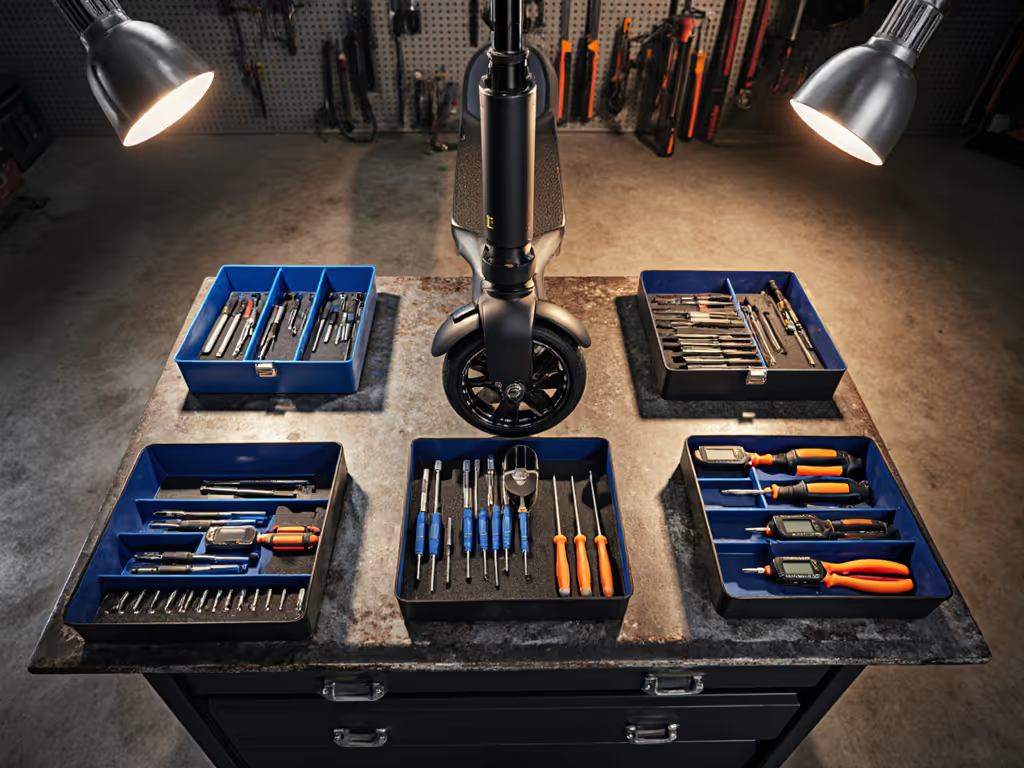
- Use trays, dividers, or simple foam to: For step-by-step layouts and foam insert tips, see optimized tool chest foam to find tools faster.
- Keep socket rails in easy-to-read rows (no piles).
- Separate metric from SAE and deep from shallow.
- Give each wrench family a clearly defined lane.
Label each drawer with clear, solvent-resistant language: "Sockets - Metric 3/8 & 1/2", "Wrenches - Metric 10-24 mm", "Electrical - Test & Crimp." Quiet slides and labeled zones keep brains fresh, especially late in the day.
Step 4: Create a Dedicated Lube & Fluids Zone
Decide where grease guns and fluids live:
- If your chest has a tall side locker, convert it into the lube station.
- If not, add a narrow cabinet or wall rack near the main bay.
- Give each gun a permanent parking spot and label it.
Store cartridges, jugs, and funnels directly adjacent. The goal is to never "go looking for the grease gun" again.
Step 5: Tame Cordless Chaos
Pick one chest or cabinet as the cordless hub:
- Install a strip or use existing outlets for chargers.
- Route cords cleanly so drawers close without pinching.
- Label battery homes by tool or voltage.
Tie this into your field kits: when a truck comes in, batteries go back to that same hub. No wandering packs.
Step 6: Standardize and Document
Once you like a layout, lock it in:
- Take overhead photos of each drawer.
- Print a simple drawer map and stick it inside the chest lid or bay wall.
- Use the same order in every primary chest: sockets top left, wrenches top right, electrical below, etc.
This is where a lot of shops feel the change, suddenly, cross-covering a bay or sending a different tech on a service call doesn't slow the repair.
Step 7: Review After a Harvest or Busy Season
After your next intense season (planting, harvest, hay), do a fast audit:
- Which drawers were constantly full and chaotic?
- Which tools migrated to the bench or tractor steps between jobs?
- Where did you still walk too far?
Adjust drawer content, maybe add one more cabinet, or move the primary chest closer. Small changes in reach-distance metrics compound into noticeable fatigue reduction.
In more than one heat-soaked bay, simply resetting drawer heights, improving slides, and cleaning up labeling has cut both walking and search time in half.
Ergonomics here is not about comfort for its own sake, it is about fewer mistakes, steadier pace, and safer hands.
Your Next Action: A 60-Minute Farm Storage Audit
Set aside one focused hour this week and do this:
- Stand at your main tractor bay and mark, with tape, a three-step radius.
- List the 20 tools you touch the most on tractor jobs.
- Check where each lives today - inside or outside that radius.
- Move chests, reassign drawers, or plan one new chest so at least 15 of those tools end up inside that three-step circle.
- Label the updated drawers before you walk away.
Once that is done, schedule a follow-up in 30 days to:
- Time a couple of typical repairs before and after the changes.
- Ask every tech what still feels "too far" or "hard to find".
- Decide if you need to add a field chest, upgrade slides, or standardize additional bays.
If you treat your farm equipment repair storage like any other critical system on the farm (measure, adjust, and standardize) you will feel the difference every time a tractor rolls in with a problem. The right mix of chests, organized the right way, turns breakdowns from chaos into a calm, repeatable workflow.
Related Articles